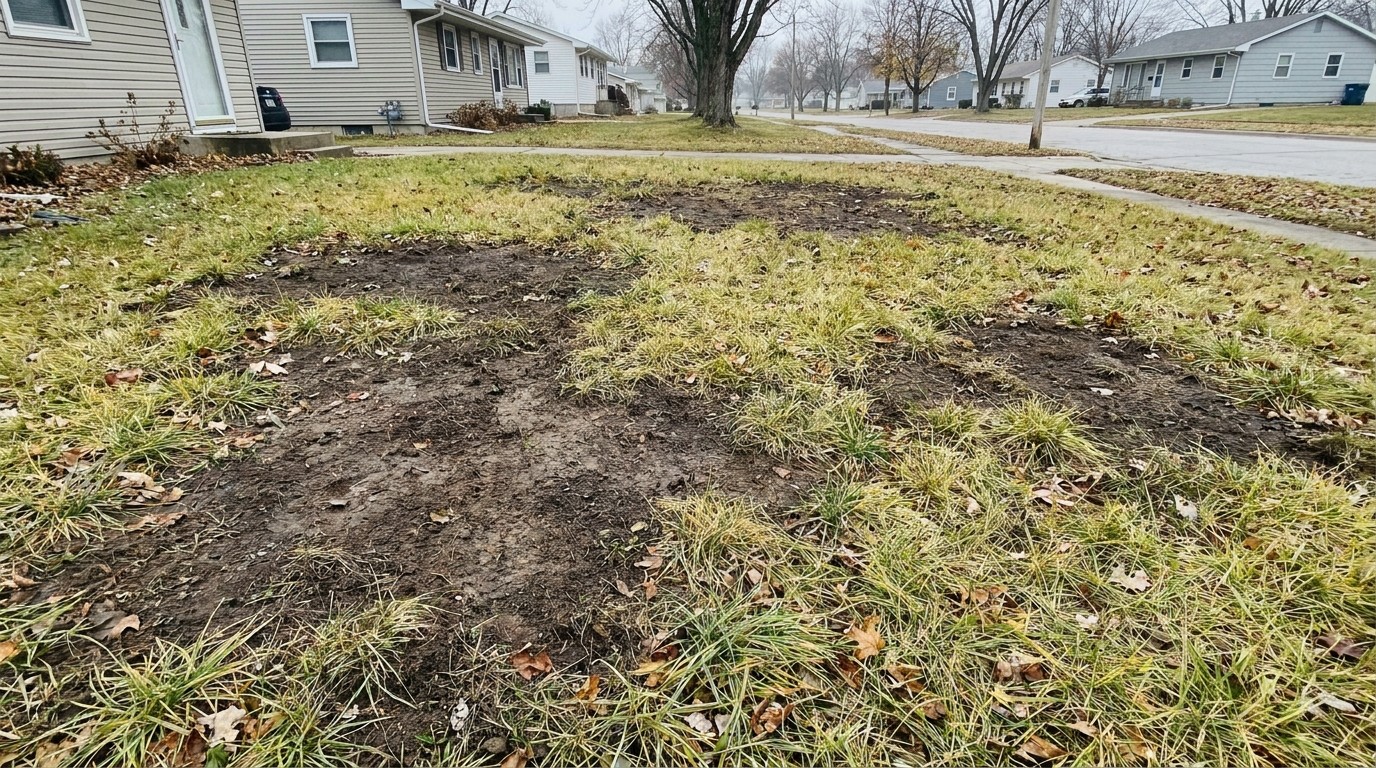
You step outside and there they are — those frustrating brown patches, bare spots, and thin stretches of grass that make your whole yard look neglected. It happens to some of the best-kept lawns in Eastern Iowa, and you're not alone in dealing with it.
The good news: patchy, thin grass is fixable. The key is understanding why it's happening before you throw seed at it. Fix the wrong problem and those patches will be back next season, guaranteed.
This guide walks you through every step — from diagnosing the real cause, to repairing bare spots, to keeping your lawn thick for years to come.
Rather skip the DIY and get it done right the first time?
Text Ryan for a Free Lawn AssessmentWhat's Really Causing Your Patchy Lawn?
Thinning grass and bare spots aren't random. They're signals your lawn is sending. Here are the most common culprits in Eastern Iowa:
Compacted Clay Soil
Eastern Iowa's heavy clay soil is beautiful for growing crops — but it compacts hard under foot traffic and equipment. When soil compacts, it cuts off the water, oxygen, and nutrients grass roots need. The result: weak, thin grass and eventually bare patches. If water runs off your lawn instead of soaking in, compaction is likely part of the problem.
Heavy Foot Traffic
Those worn paths near driveways, gates, or play areas are classic patchy zones. Constant foot traffic presses the soil down and physically wears out the grass crown — the point the plant regrows from.
Too Much Shade
Iowa's mature oak and maple trees provide great summer shade — but they can starve grass underneath of the 4-6 hours of direct sunlight most grass types require. If your bare spots consistently appear under tree canopy or along fence lines, shade is your issue.
Pet Urine Damage
Dog urine deposits concentrated nitrogen that burns the grass and creates those distinct yellow, brown, or dead circles. Pets that favor the same spots do the most damage.
Improper Watering
Iowa's clay soil holds moisture longer than sandy soils — which means overwatering is just as damaging as underwatering. Too much water causes shallow roots, fungal disease, and drainage problems. Too little and the lawn dries out during Iowa's 90-degree summer stretches.
Iowa Winter Freeze-Thaw Damage
Eastern Iowa's winters bring repeated freeze-thaw cycles. Shallow-rooted or already-thin grass gets physically heaved out of the ground as soil expands and contracts, leaving bare zones that weren't there in the fall. If your patches appeared after snowmelt in spring, this is the likely cause.
Lawn Disease or Grubs
If dead grass pulls up easily in your hand — almost like loose carpet — grub damage is a strong possibility. Grubs feed on grass roots just below the surface. Circular dead patches often point to fungal disease. Both require treatment before reseeding, or the problem comes right back.
Diagnose Before You Dig: Pinpointing the Problem
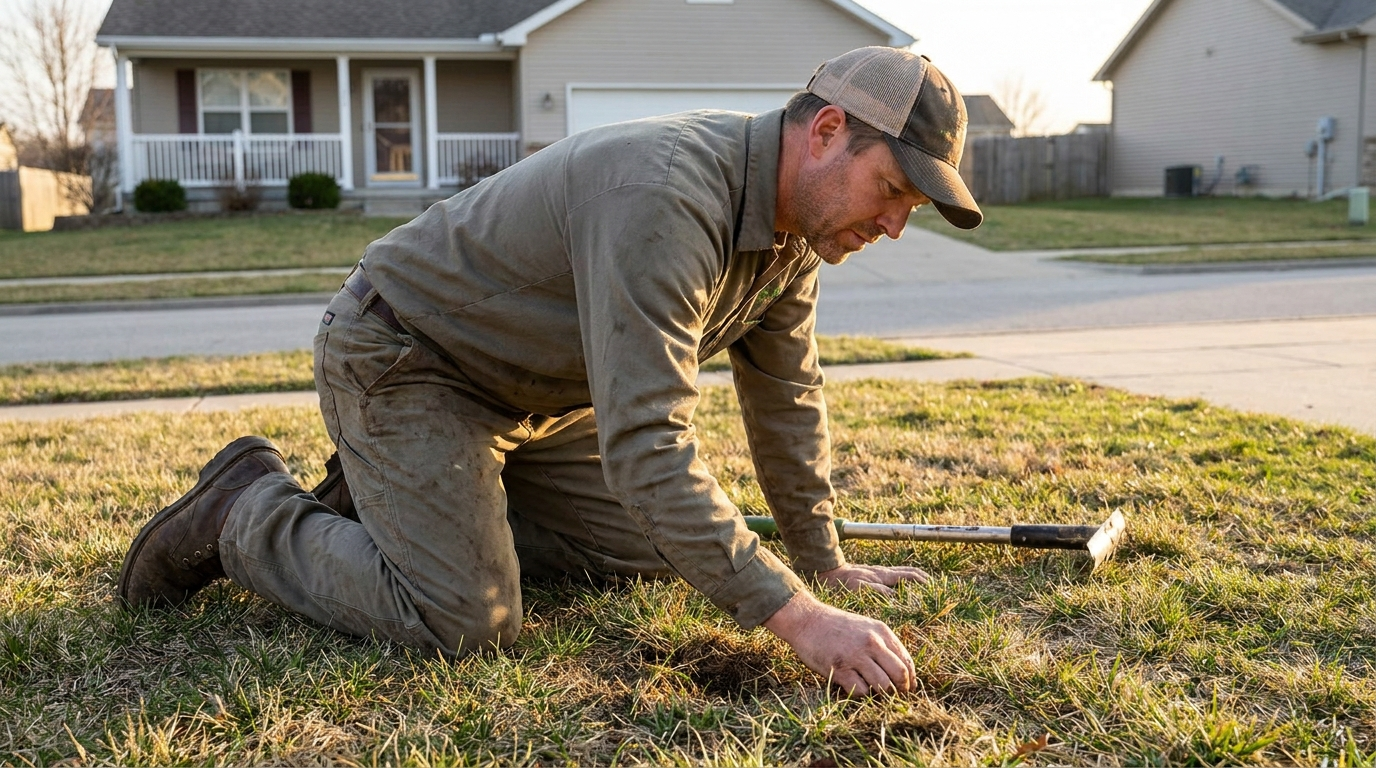
A little observation goes a long way before you spend money on seed and topsoil.
Check the soil. Push a screwdriver into the ground. If it's hard to push past 2 inches, your soil is compacted and needs aeration before any seed will take hold.
Look at sunlight patterns. Do the bare spots consistently appear in the same shaded areas? Mark them on a map of your yard and check if they all share a common factor: a tree, a fence line, the shadow of your house in the afternoon.
Do the tug test. Grab a handful of dead grass and pull gently. If it lifts like a rug with no roots attached, grubs have been eating the root system below.
Check your sprinkler coverage. Walk your system through a full cycle and watch. Dry zones that aren't getting consistent water are an extremely common and easily missed cause of patchy grass.
Look for patterns. Circular patches = fungus. Linear patches along walkways = foot traffic. Scattered yellow spots in pet zones = urine. These clues tell you exactly what you're dealing with.
If you've gone through this checklist and still can't pinpoint the cause, Ryan's on-site assessment is worth the call — he diagnoses the problem first, then recommends the right fix.
Step-by-Step: Repairing Bare Spots in Your Lawn
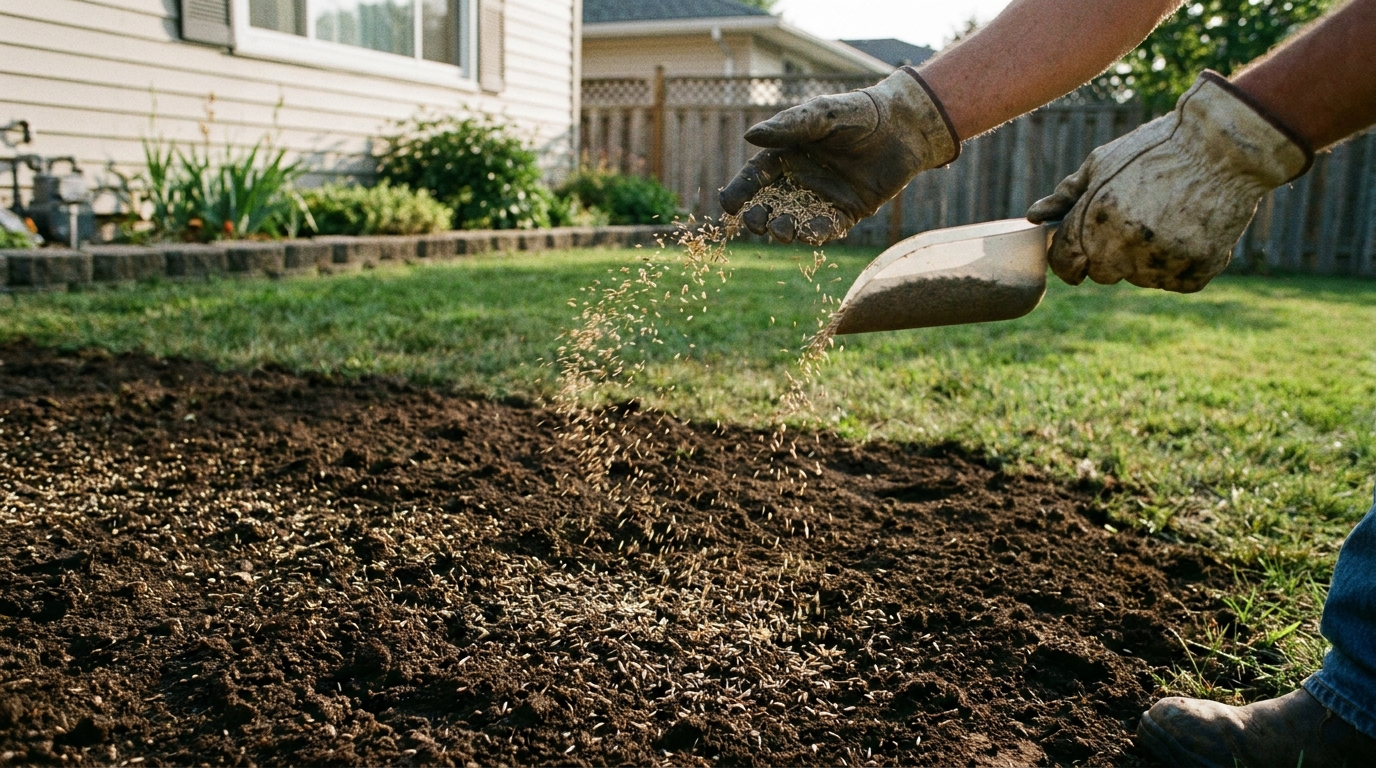
Once you know the cause, here's how to fix it correctly:
- Remove dead grass and debris. Rake out the dead material completely. New seed needs direct soil contact to germinate — anything sitting on top of dead thatch won't take.
- Loosen the soil. For Iowa's clay soil, this step is non-negotiable. Use a hand rake or cultivator to break up the top 2-3 inches. Compacted clay will reject seed every time.
- Add topsoil or compost. A half-inch layer of quality topsoil or compost mixed into the loosened soil gives roots something to work with, especially in spots where the soil quality has degraded.
- Choose the right seed for Iowa. Cool-season grasses only — Kentucky Bluegrass for sunny areas, Tall Fescue for high-traffic zones (it handles Iowa's summer heat and drought better), Fine Fescue blends for shaded spots. Avoid warm-season varieties like Bermuda or Zoysia — they won't survive Iowa winters.
- Spread seed evenly. Too thin and you'll get sparse results. Too dense and seedlings compete and fail. Follow the bag's recommended coverage rate.
- Cover lightly. A thin layer of straw or a lawn starter mix protects seeds from birds, wind, and drying out — without smothering them.
- Water consistently. Keep the top inch of soil moist until seedlings reach 2 inches tall. With Iowa clay, check moisture before watering — overwatering new seed is a common mistake.
- Keep traffic off. Mark the area and stay off it for at least 4 weeks. Foot pressure before roots establish will kill the new seedlings.
Making Thin Grass Thicker All Season
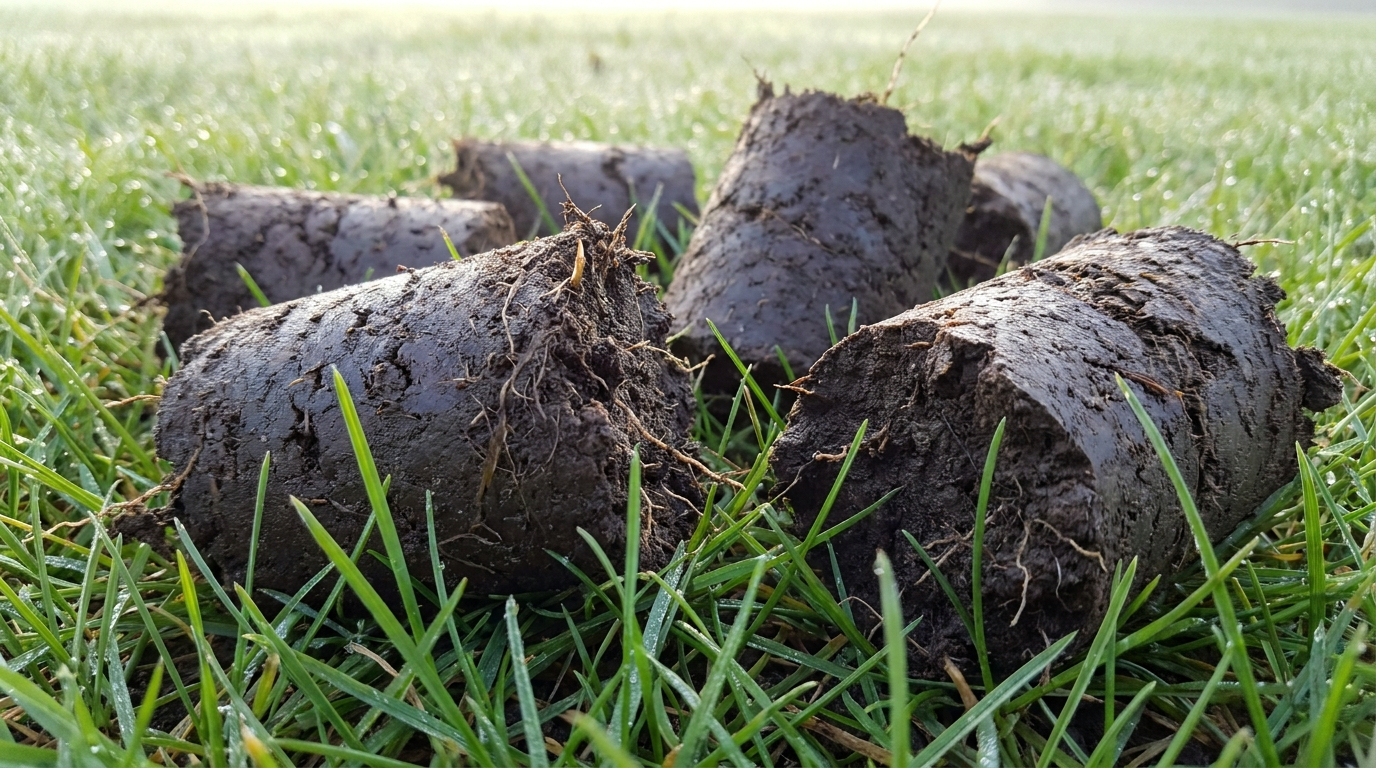
Patching bare spots is one thing. Getting your whole lawn denser and more resilient is another. Here's what actually works:
Overseeding. Spreading fresh seed over your existing lawn fills in thin areas and introduces newer, stronger grass varieties. Best done in fall in Iowa — more on timing below.
Core aeration. For Iowa's clay soils, aeration is the single highest-leverage thing you can do. A core aerator pulls small plugs from the ground, breaking up compaction and opening channels for water and nutrients to reach the root zone. Paired with overseeding, it dramatically improves germination rates. See our lawn care services for what we offer.
Proper fertilization. Thin grass is often nutrient-deficient. A slow-release fertilizer applied at the right time — fall for cool-season grasses — builds root mass through winter so your lawn comes back thicker in spring.
Weed control. Thin lawns invite weeds. Weeds then steal sunlight, nutrients, and water, making the lawn thinner. Getting ahead of weeds is part of thickening your turf.
Correct mowing height. Never cut more than one-third of the blade in a single mow. For Tall Fescue (common in Iowa), 3-4 inches is the ideal mowing height. Taller grass shades the soil, reducing evaporation and weed seed germination.
Timing Matters: When to Repair Your Iowa Lawn
Choosing the right season is as important as choosing the right seed. Get the timing wrong and you're wasting your effort.
Fall is the best window in Iowa. Late August through mid-October is ideal for overseeding and bare-spot repair in Eastern Iowa. Cooler temperatures reduce heat stress, consistent rainfall reduces your watering burden, and weed competition drops significantly. Cool-season grass roots that establish in fall are stronger and deeper by spring.
Spring is the second-best option. April through early May works for smaller repairs. The risk is that summer heat arrives before new roots have fully established, and crabgrass competition peaks in late spring.
Summer repair is difficult. Seeding in Iowa's July and August heat means constant watering to prevent seedling die-off. It can work for small patches with diligent care, but fall is far more forgiving.
Book your fall lawn repair now — schedules fill fast in August and September.
Text Ryan to Reserve Your Fall SlotCommon Mistakes That Keep the Patches Coming Back
Even with good intentions, these mistakes undo the work:
- Throwing seed on hard soil. If you skip the soil prep, 80% of your seed will either wash away, dry out, or sit on top of the ground until a bird eats it. Iowa clay will not cooperate.
- Watering once and calling it done. New seed is on the clock. Inconsistent moisture kills germination. Set a reminder — twice daily for the first two weeks until sprouts appear.
- Mowing too soon. Most homeowners mow too early. Wait until new grass reaches 3 inches. Mowing before roots establish pulls the whole seedling out of the ground.
- Ignoring the original problem. This is the biggest one. If you don't fix the drainage, the compaction, the shade, or the grubs — those exact same patches will be back within one growing season.
Prevention: Keep Your Lawn Thick for the Long Term
Once your lawn is looking good, these habits protect it:
- Mow regularly at the correct height — never scalp
- Water deeply but infrequently — 1 inch per week, less often during cooler periods
- Aerate compacted areas annually, especially high-traffic zones
- Fertilize in fall with a slow-release formula to build root reserves for winter
- Address weeds early — pre-emergent in spring before crabgrass germinates
- Fix drainage issues before they create chronic wet-spot damage
When to Call a Lawn Care Pro
Some situations are worth handing off:
- Large bare areas — anything covering more than a few square feet benefits from professional assessment and aeration before seeding
- Same spots keep coming back — recurring patches almost always signal a deeper issue (drainage, compaction, grubs, shade) that needs diagnosis before treatment
- Drainage problems — standing water, soggy soil, or visible low spots require grading or drainage correction beyond typical DIY scope
- You want it done correctly, once — lawn repair done right in fall produces results that last. Lawn repair rushed or timed wrong produces another round of the same problem next spring
Ryan Rasmussen has been repairing Eastern Iowa lawns since 2021. He's on every job personally — not sending a crew. When you call Ryan Ras, the owner is on-site doing the work. You can see examples of his results in the project gallery.
Frequently Asked Questions
Why is my grass patchy in Eastern Iowa?
Patchy grass in Eastern Iowa is most commonly caused by compacted clay soil, heavy foot traffic, excessive shade from mature trees, pet urine, drought stress during hot Iowa summers, or freeze-thaw heaving in winter. Identifying the specific cause before reseeding is the difference between a permanent fix and a seasonal band-aid.
When is the best time to repair patchy grass in Iowa?
Late August through mid-October is the best window for Eastern Iowa. Cool temperatures, consistent moisture, and low weed competition give cool-season grasses (Kentucky Bluegrass, Tall Fescue) their best chance to establish strong roots before winter. Spring — April to early May — is the second-best window for smaller repairs.
Can I fix patchy grass myself?
Smaller bare spots can absolutely be repaired DIY with proper soil preparation, the right Iowa-suited grass seed, and consistent watering. Larger areas, recurring patches, drainage problems, or consistently poor soil quality typically benefit from a professional assessment to diagnose and fix the root cause permanently.
Why do bare spots keep coming back in the same place?
Recurring bare spots mean the original cause was not addressed. In Eastern Iowa, the most common recurring culprits are compacted clay soil, chronic drainage issues, shade from trees or structures, persistent grub pressure, or pet damage. Reseeding without treating the source will always produce the same result.
What grass seed works best for Iowa lawns?
For Eastern Iowa (Zone 5b), stick to cool-season grasses: Kentucky Bluegrass for sunny, well-maintained areas; Tall Fescue for high-traffic or drought-prone spots; Fine Fescue blends for shaded areas. Avoid warm-season grasses like Bermuda or Zoysia — they will not survive Iowa winters.
When should I call a lawn care company for patchy grass?
Call a professional if you have large bare areas, spots that keep reappearing after reseeding, drainage problems or standing water, or if you want the job done correctly the first time without the guesswork. Ryan Ras Lawn and Landscape serves Solon, Iowa City, Cedar Rapids, Marion, North Liberty, and Coralville.