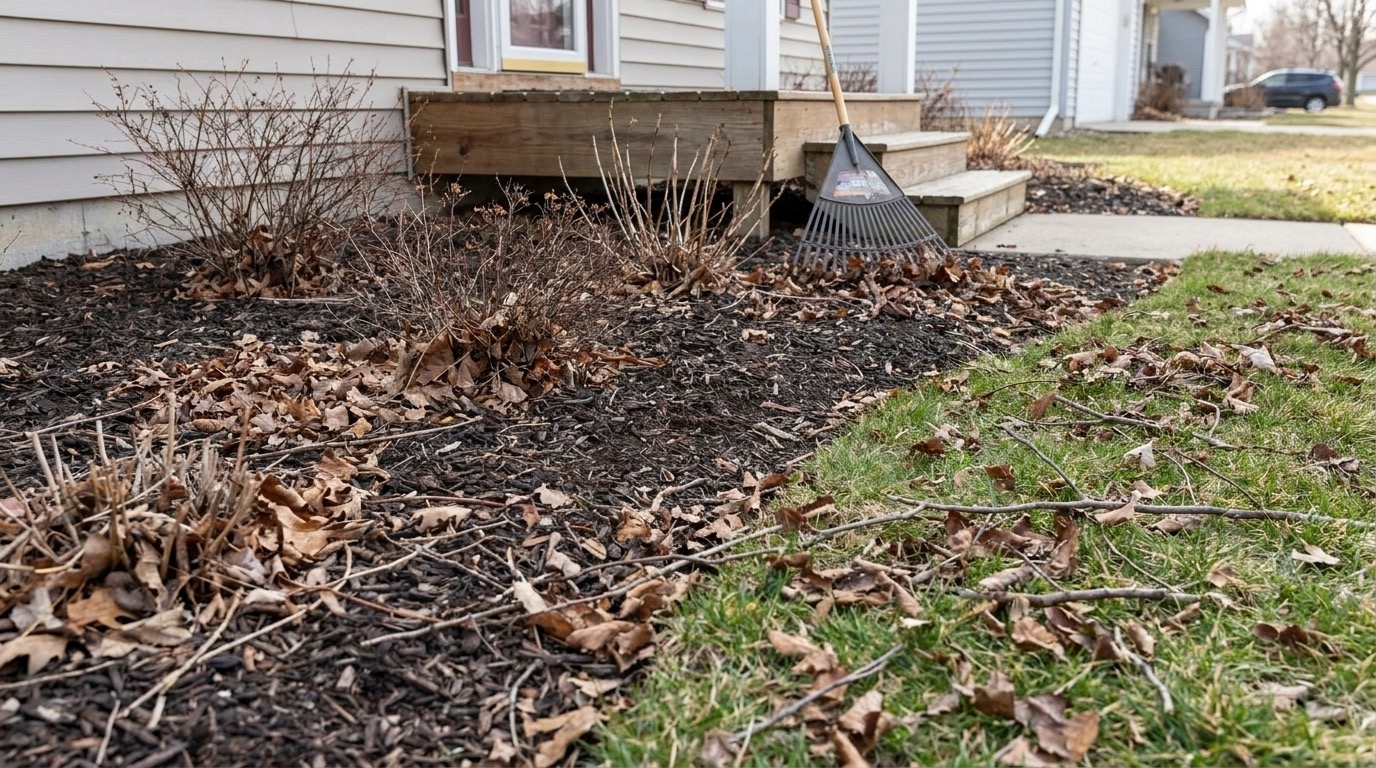
Start spring cleanup in Eastern Iowa once the ground has thawed and soil temperatures hold above 40°F for several days in a row — typically mid-to-late March, sometimes early April after a slow-melt winter. Working the lawn while clay soil is still frozen or waterlogged from snowmelt compacts it and damages the grass crowns underneath. Wait for firm, walkable ground before you touch a rake.
The Soil Cue That Actually Matters
Forget the calendar date. What matters is whether you sink into the lawn when you walk on it.
If your boot leaves a print or the ground squishes, the clay is still holding meltwater and you'll compact it by working on it now. Give it another week.
Once the yard holds your weight without sinking and daytime soil temps are consistently above 40°F, you're clear to start.
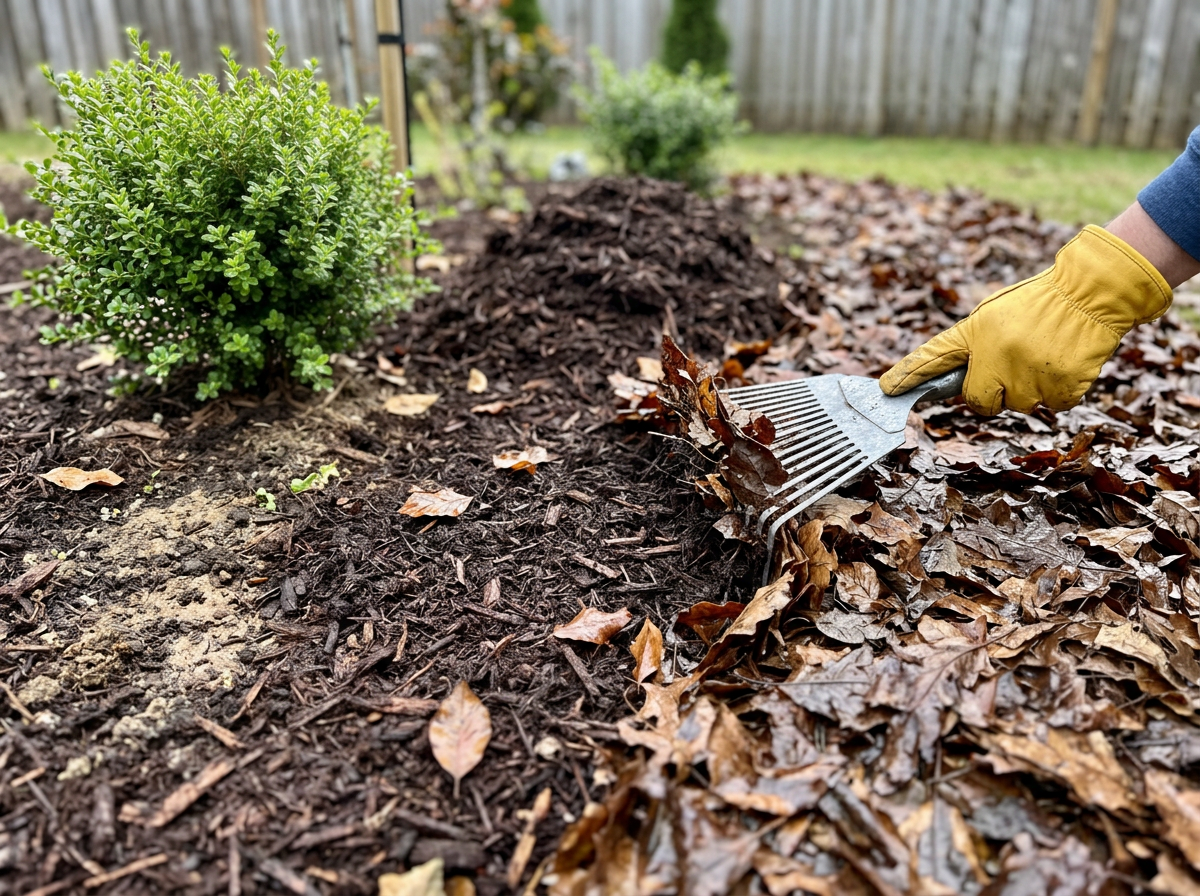
Why Timing Trips People Up in Iowa
Eastern Iowa winters are inconsistent. Some years the frost is out of the ground by mid-March; other years a late cold snap pushes everything back two or three weeks.
Guessing by the calendar instead of the soil is the most common mistake homeowners make here — and it's the fastest way to leave ruts in a lawn that would've been fine a week later.
The Full Checklist
Once the ground is ready, work through it in this order. Skipping the order costs you time — mulching before you've cleared debris means doing bed work twice.
- Rake and remove leaves, sticks, and matted debris from beds and turf
- Cut back dead perennial growth and ornamental grasses
- Edge beds and walkways to reset clean lines
- Check for winter damage — broken branches, heaved pavers, matted low spots
- Test soil compaction and thatch depth before deciding on aeration or dethatching
- Dethatch if the thatch layer is over half an inch thick
- Aerate — most Eastern Iowa clay lawns need this every spring regardless of thatch
- Apply a pre-emergent if crabgrass has been a problem in past years
- Refresh mulch beds after debris is fully cleared
- First mow once grass hits 3–3.5 inches, blade set high
Rather skip the guesswork and have Ryan walk the property first?
Text Ryan for a Free QuoteDethatching Versus Aeration
These get lumped together, but they solve different problems. Thatch is the dead organic layer sitting on top of the soil; compaction is the soil itself packed too tight for roots and water to move through it.
On Iowa clay, compaction is almost always the bigger issue, so aeration earns its spot on the checklist every year. Dethatching only matters if that spongy top layer has built up past half an inch — check by cutting a small wedge of turf and looking at the cross-section.
When First-Mow Prep Is Enough on Its Own
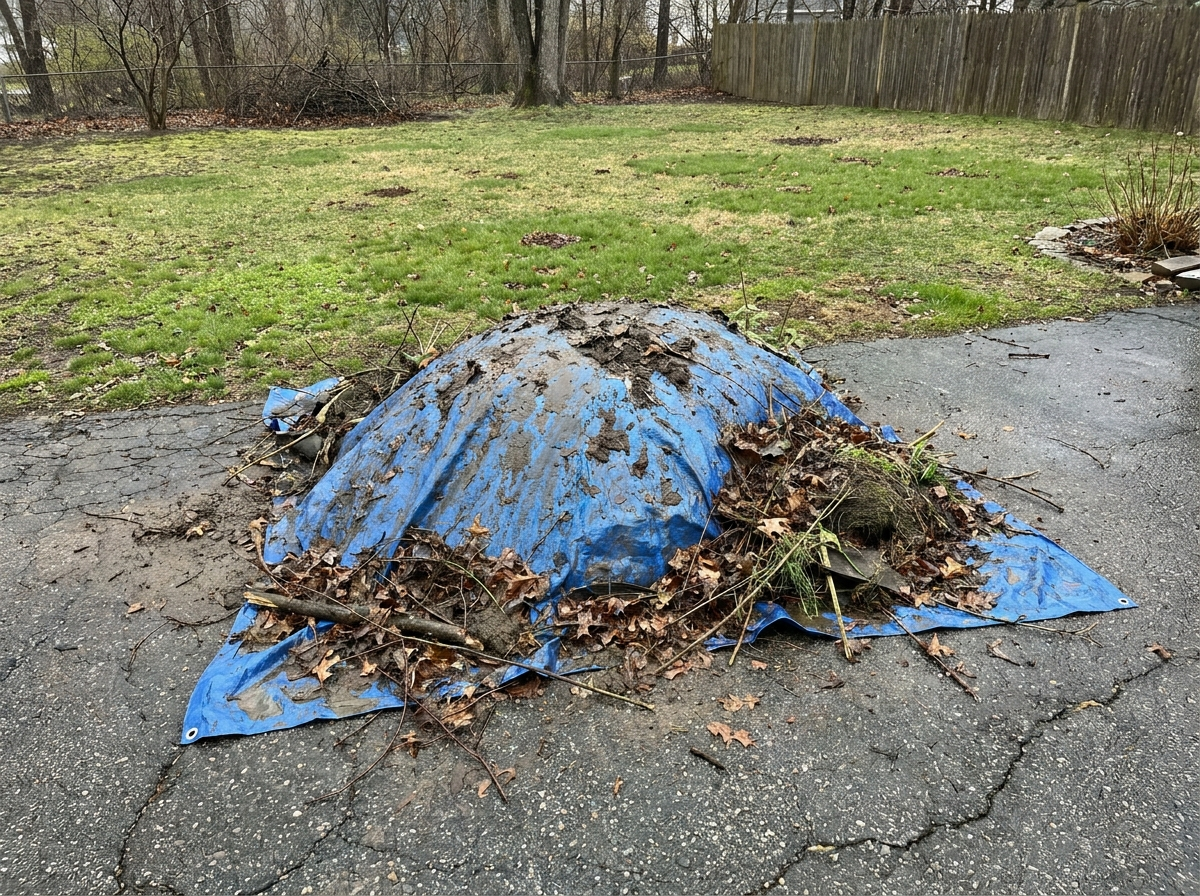
If your yard came through winter clean — no major debris, healthy turf, minimal thatch — you may not need the full reset. A debris check, an edge pass, and the first mow at the right height can cover it.
Save the deeper steps (aeration, dethatching, pre-emergent) for years when the lawn actually shows the wear.
DIY or Hire It Out
A small, well-maintained yard is a reasonable weekend project — a rake, a mower, and a few hours will get you through the checklist above.
Where it stops being worth DIYing: large properties, heavy winter debris, compacted clay that needs equipment-grade aeration, or beds that have been neglected more than a season. That's when the labor cost of doing it yourself outweighs just having it done right the first time.
Explore Our Services
Frequently Asked Questions
When is it too early to clean up the yard in spring?
It's too early if the soil is still frozen or saturated with snowmelt. Walking on frozen or waterlogged Iowa clay compacts it and can smother the grass crowns underneath. Wait until the ground has thawed and firmed up — usually mid-to-late March in Eastern Iowa — before doing any raking, mowing, or bed work.
Should I dethatch or aerate first?
Dethatch first if your thatch layer is over half an inch thick, then aerate a week or two later once the lawn has recovered. On Eastern Iowa clay soil, most yards need aeration every year regardless of thatch, since compaction is the bigger issue. If thatch is thin, skip dethatching and go straight to aeration.
What does a professional seasonal yard reset include?
A professional visit from Ryan Ras typically covers debris and leaf removal, bed edging, mulch bed refresh, first mow and trim, and a full aeration pass if the lawn needs it. Ryan walks the property first and tells you straight what your yard actually needs instead of running a generic package.